

If you’re asking, “can you vape when pregnant?”, the cautious answer is that vaping isn’t risk-free, so you shouldn’t start if you don’t smoke. If you do smoke, NHS guidance recognises that switching completely to vaping is likely to be less harmful than continuing to smoke. Where possible, the aim is to stop using nicotine.
It’s understandable to feel worried if you vaped before you knew you were pregnant, or unsure about stopping nicotine without returning to cigarettes. Try not to blame yourself. Speak openly with your midwife, GP or local stop smoking service. They can discuss your circumstances and suitable options, including nicotine replacement therapy.
This guide explains what UK health advice says, what remains uncertain and what you can do next. It also offers practical ways to raise vaping or smoking with a clinician and get support without judgement or false reassurance.
Key Takeaways
- Understand the cautious answer to “can you vape when pregnant?” and what UK guidance says about risk.
- Learn why nicotine and e-cigarette aerosol are considered separately, and why evidence about vaping during pregnancy remains limited.
- See how vaping and smoking differ, and how to discuss that comparison with a maternity professional.
- Plan a practical next step by telling your midwife or clinician whether you vape, smoke or do both.
- Find out what support options to ask about, without feeling judged for what happened before you knew you were pregnant.
Can you vape when pregnant? The careful answer
If you’re asking “can you vape when pregnant?”, the cautious answer is that vaping isn’t risk-free and isn’t something to start if you don’t smoke. If you smoke and vaping helps you stop, UK NHS guidance recognises that switching completely to vaping is likely to be less harmful than continuing to smoke. Nicotine replacement therapy (NRT), such as patches or gum, is generally the first option to discuss with a health professional.
This comparison doesn’t mean vaping is safe, or that its effects during pregnancy are fully understood. Research informs guidance, but it can’t guarantee what will happen in an individual pregnancy. For a wider overview that isn’t specific to pregnancy, see Health effects of electronic cigarettes. For advice about your own circumstances, speak to your midwife, GP or another maternity professional.
What should the short answer say?
Don’t start vaping if you don’t smoke. If you do smoke, ask a clinician about support to stop, including NRT and whether vaping could form part of a plan to move away from cigarettes. The right advice depends on what you currently use and your circumstances. Explain whether you vape, smoke or do both, so the conversation can focus on support that suits you.
What if you vaped before you knew you were pregnant?
Finding out you’re pregnant can bring an immediate wave of worry about what you did beforehand. You don’t need to hide it or decide by yourself what it means. Tell your midwife or GP what you used, including whether the vape contained nicotine and, if you know, roughly when and how often you used it. They can discuss your circumstances and next steps with you.
Vaping earlier in pregnancy alone can’t tell you what has or hasn’t happened. This article can’t assess an individual outcome, and no one should offer certainty without knowing your situation. Try not to turn uncertainty into self-blame. An honest conversation gives your maternity team information they can use to support you from here.
What do we know about nicotine and vaping during pregnancy?
Nicotine and vape aerosol are related, but they aren’t the same thing. Nicotine is an addictive substance that may be present in vape liquid. Aerosol is the mist created when a vape heats liquid. Depending on the product, it can contain nicotine and other substances. Considering nicotine alone therefore doesn’t describe everything someone may inhale when vaping.
What should readers understand about nicotine?
UK advice treats nicotine replacement therapy (NRT), such as patches or gum, differently from smoking. The NHS recommends discussing NRT with a health professional as a way to stop smoking during pregnancy. NRT is designed to provide nicotine without smoking tobacco, but that doesn’t make every nicotine product interchangeable or mean you should choose a product or dose without advice. A midwife, GP or stop-smoking professional can help you consider suitable options.
Nicotine is one part of the question, not a complete measure of risk. The NHS distinguishes support for stopping smoking from any claim that vaping is harmless. Its NHS advice on vaping during pregnancy explains the UK position and why someone who smokes should seek support to stop.
What is known about vape aerosol in pregnancy?
Vaping doesn’t burn tobacco, but its aerosol isn’t simply clean air. What it contains can vary with the liquid and device, and evidence about the effects of vaping throughout pregnancy is incomplete. It’s therefore difficult to draw firm conclusions about every product, pattern of use or individual pregnancy. Incomplete evidence doesn’t prove that there is no risk.
What’s known is that NHS guidance treats NRT as an option to discuss when stopping smoking. What remains uncertain is the full effect of vaping and its aerosol during pregnancy. This distinction matters: guidance comparing vaping with continued smoking isn’t the same as saying vaping is safe or equivalent to a clinically supported treatment.
If you’re trying to make sense of conflicting claims, focus on what applies to your circumstances. Tell your maternity professional what you use and ask them to explain the available evidence and support. Don’t use general information about nicotine or aerosol to predict an individual pregnancy outcome, or decide on a nicotine product or dose without professional advice.
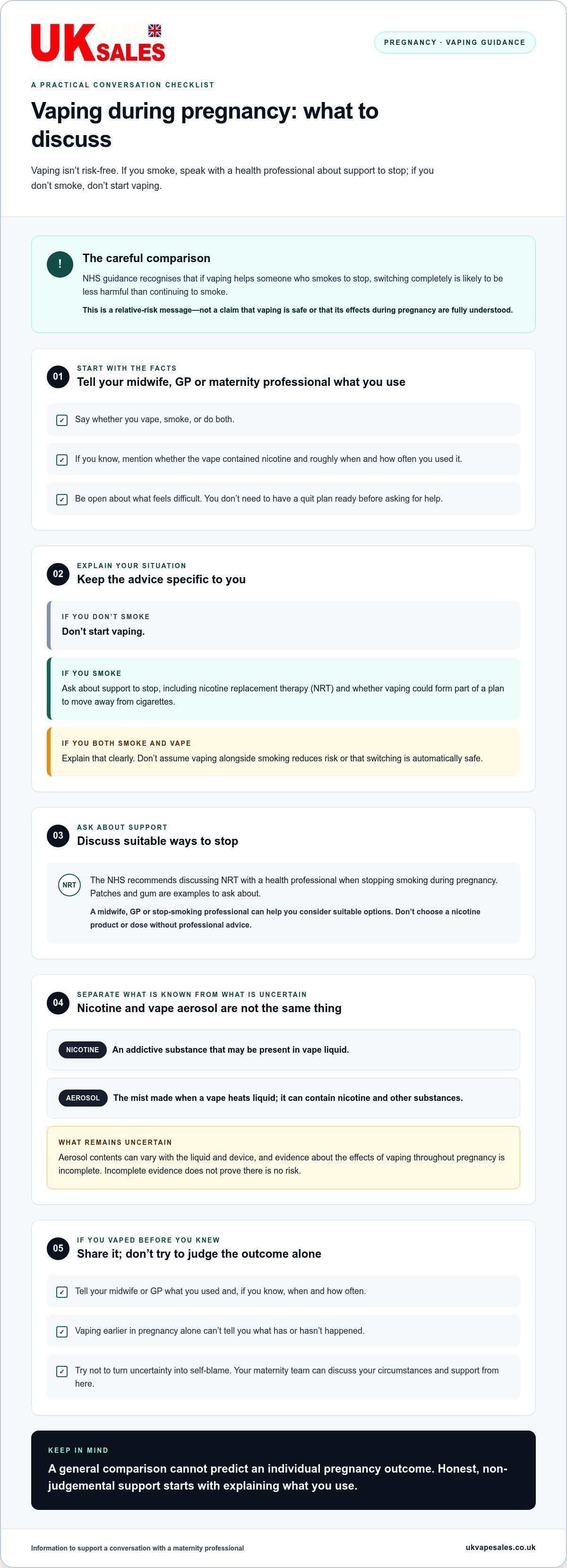
Vaping or smoking during pregnancy: how to handle the comparison
Vaping and smoking aren’t interchangeable. Smoking involves burning tobacco; vaping doesn’t, but that doesn’t make vape aerosol harmless. UK NHS guidance says that if vaping helps someone stop smoking, it is likely to be less harmful than continuing to smoke. This is a relative-risk message, not a recommendation for someone who doesn’t smoke to start vaping or a guarantee about an individual pregnancy.
A simple “safe or unsafe” label can miss important details: what someone uses, whether they still smoke and what support could help them stop. The NHS recommends discussing nicotine replacement therapy (NRT) with a health professional when stopping smoking during pregnancy. Advice should reflect a person’s situation, not rely on a general comparison alone.
What the guidance says: If vaping helps a person who smokes to stop smoking, it is likely to be less harmful than continuing to smoke.
What remains uncertain: Vaping isn’t risk-free, and the full effects of vaping during pregnancy aren’t known.
What support can do: A midwife, GP or stop-smoking professional can discuss smoking, vaping and suitable ways to stop.
What if someone both smokes and vapes?
If you use both, tell your maternity professional honestly. Don’t assume that vaping alongside smoking reduces risk or that switching is automatically safe. Explain what you use and what feels difficult about stopping. You don’t need to have a quit plan ready before asking for help. The NHS advises seeking support to stop smoking, and a clinician can discuss options in light of your circumstances.
Why avoid a simple safer-or-unsafe label?
Population-level guidance describes general comparisons; it can’t predict an individual pregnancy outcome. So the question “can you vape when pregnant?” needs more than a one-word answer. Guidance distinguishes vaping from continued smoking while recognising uncertainty and the need for personal support. For broader context on how vaping and smoking compare, read about vaping and smoking health evidence. During pregnancy, discuss your own use with a maternity professional and use NHS guidance on stopping smoking as a starting point.
What should you do next if you vape during pregnancy?
If you’re still wondering “can you vape when pregnant?”, the most useful next step is to speak with your maternity team. You don’t need to work out a plan alone or decide in advance what you want to change. Support should take account of whether you vape, smoke or use both.
- Speak openly with a maternity professional. Contact your midwife, GP or maternity team and explain what you currently use. If you’re unsure how to raise it, you could say, “I vape and I’d like advice about support during pregnancy.”
- Describe your use as clearly as you can. Mention whether you smoke as well as vape, whether you know if your vape contains nicotine and what concerns you most. Share what you can. You don’t need every detail to ask for help.
- Ask about suitable support. Ask what options are appropriate for you, including whether your maternity team or NHS stop-smoking service can help. You don’t have to choose how to change your nicotine use before speaking to a professional.
- Agree a next step together. Your clinician can help you consider what to do next based on your circumstances. If stopping or changing feels difficult, say so, especially if you’re worried about returning to smoking.
What can you discuss with a midwife or GP?
You can talk about what you use, how long you’ve used it and any worries about stopping or smoking again. Ask what pregnancy-appropriate support is available and whether a stop-smoking professional can speak with you. You’re asking for guidance, not being tested. Your clinician can help you consider the information without making assumptions about your readiness or prescribing a plan here.
Where can you find further support?
The NHS page on stopping smoking during pregnancy explains the NHS approach and is a useful starting point. Your midwife or GP can help you find out what maternity support is available and how to access it. Services can differ, so ask your care team which options are relevant to you.
General online quitting guides may help you prepare questions or think through a change, but they aren’t a substitute for personalised maternity or clinical advice. Be open about vaping, smoking or both, and ask for support that fits your situation.
Take your next step with support
Questions about can you vape when pregnant can feel difficult to raise, but you deserve clear, personal advice without judgement. If you’re unsure what to ask, write down your concerns and take them to your next conversation with a maternity professional.
If you’re thinking about changing your vaping habits, this practical guide to quitting vaping offers general ideas to consider. It’s optional reading, not medical advice or a substitute for personalised support from your midwife, GP or maternity team.
You don’t need to have everything decided before asking for help. Speak with your midwife, GP or maternity team and agree a next step that fits your circumstances.
Frequently Asked Questions
Is nicotine-free vaping safe during pregnancy?
A nicotine-free label alone can’t tell you whether a particular vape is appropriate during pregnancy. If you’re unsure what a product contains, keep its packaging or take a photo of the label to show your midwife, GP or maternity team. Ask them about that specific product rather than relying on its nicotine-free description to make a decision.
Can second-hand vape aerosol affect someone who is pregnant?
General guidance can’t tell you what a particular exposure means for you. If you’re concerned, note where it happened and whether it was a one-off or regular exposure, then ask your maternity professional. You can also ask people around you to avoid vaping in shared indoor spaces while you seek advice. This is a cautious practical step, not a prediction about an effect on your pregnancy.
What should I do if I vaped before knowing I was pregnant?
To make the conversation with your care team more useful, write down what you remember before the details become hazy. Include the product name, whether the label said it contained nicotine and the approximate period you used it. If you still have the packaging, bring it along. You don’t need to calculate an exposure or work out what it means yourself.
Can I breastfeed if I vape?
Ask your midwife, health visitor or GP for advice specifically about vaping and breastfeeding before making decisions about feeding. Explain what you use, whether it contains nicotine and how often you vape. You can also ask what support is available if you want to change your nicotine use. General advice about pregnancy may not answer your feeding questions, so raise them directly with a health professional.
Can vaping cause pregnancy complications?
A general article can’t establish whether vaping caused a particular complication or assess an individual pregnancy. If you have a specific concern, tell your maternity team what has happened and what you’re worried about, then ask whether you need an assessment or further advice. For urgent concerns, follow the contact instructions provided by your maternity service rather than waiting for an online answer.
How can a partner support someone who wants to stop vaping during pregnancy?
Ask what support they want and agree on practical help together. They might appreciate you joining them when they contact a midwife, helping write down questions or planning how to handle moments when they usually vape. Avoid monitoring or criticising them. If they change their mind or find it difficult, listen first and encourage them to choose what professional support to ask for.