

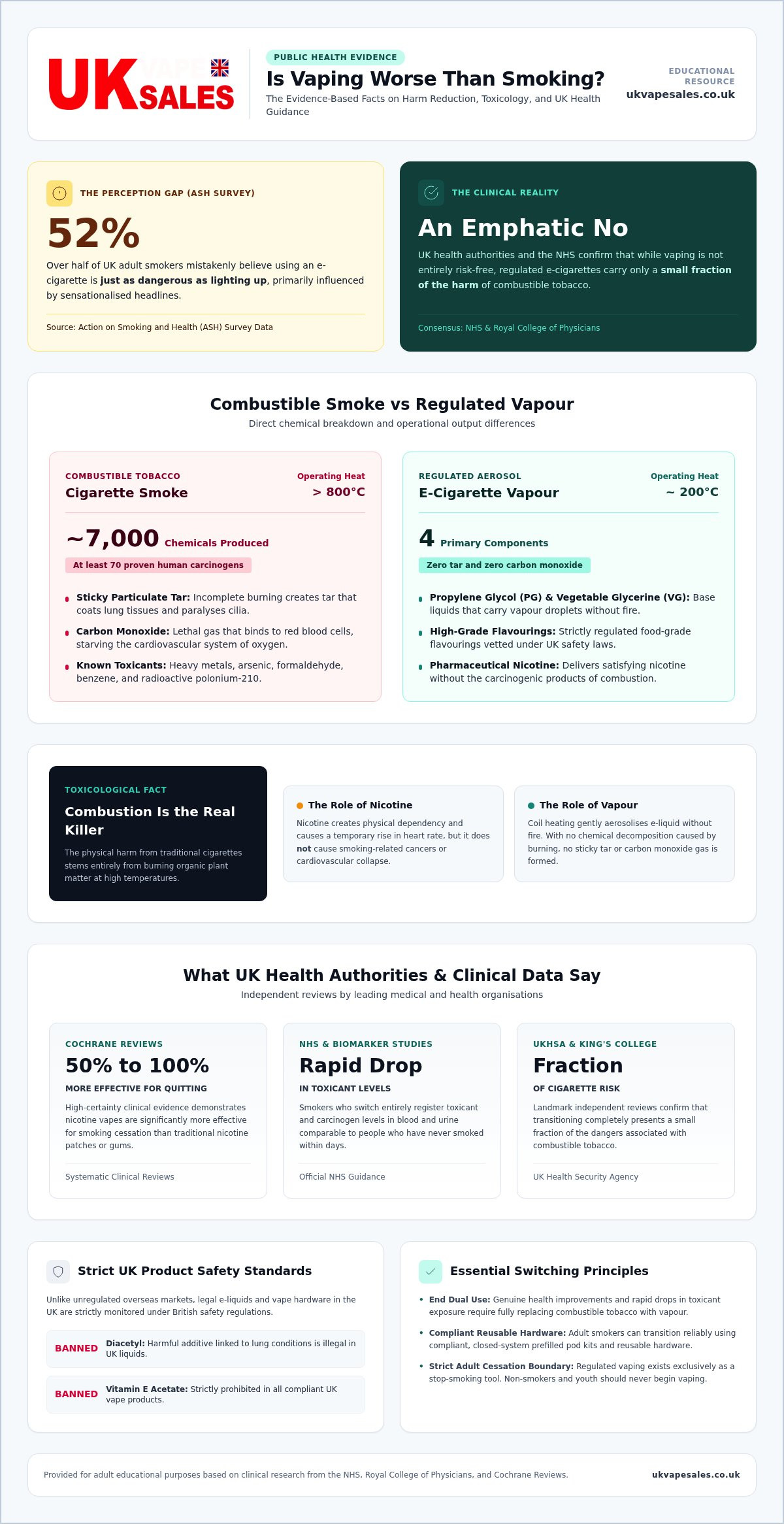
According to survey data from Action on Smoking and Health (ASH), 52% of UK adult smokers believe using an e-cigarette is just as dangerous as lighting up. If sensationalised headlines have left you asking, 'is vaping worse than smoking?', the clear, evidence-based answer from the NHS and UK health authorities is an emphatic no. While vaping isn't completely risk-free, official medical reviews confirm it carries a small fraction of the harm of combustible tobacco.
It's completely understandable to feel hesitant when news reports constantly blur the line between nicotine dependency and the lethal toxins created by burning tobacco. You deserve clear, unvarnished facts rather than scaremongering. In this guide, you'll discover the genuine chemical differences between cigarette smoke and e-liquid vapour, the medical consensus on harm reduction, and how current British safety regulations govern legal devices and liquids. Here is what the science actually says to help you make an informed decision for your health.
Key Takeaways
- Discover why UK medical consensus confirms that when asking is vaping worse than smoking, the answer is a clear no, as vaporising e-liquid eliminates the lethal tar and carbon monoxide produced by burning tobacco.
- Review official guidance from the NHS and the Royal College of Physicians recognising regulated vaping products as substantially less harmful than combustible cigarettes.
- Separate sensationalist headlines from clinical evidence with verified facts on UK safety laws, including strict bans on harmful additives like diacetyl and vitamin E acetate.
- Learn how adult smokers can transition completely using compliant, reusable vape pod kits, and why ending dual use is vital to achieving genuine health improvements.
Vaping vs Smoking: The Fundamental Differences in Harm
To settle the question directly: leading public health bodies, including the NHS and the Royal College of Physicians, agree that vaping carries a small fraction of the risk of traditional cigarettes. When smokers ask, is vaping worse than smoking, they are often reacting to headlines rather than toxicological science. While neither activity is entirely harmless, the physical damage caused by combustible tobacco stems from the act of burning, not the nicotine itself.
A burning cigarette produces roughly 7,000 distinct chemicals. Of these, at least 70 are proven human carcinogens, including benzene, arsenic, formaldehyde, and heavy metals like polonium-210. In contrast, regulated UK e-liquids contain just four primary components: propylene glycol (PG), vegetable glycerine (VG), high-grade flavourings, and pharmaceutical nicotine. Independent clinical assessments documenting the health effects of electronic cigarettes consistently report that vapers face vastly lower exposure to dangerous environmental toxicants compared to those who light up.
Here is how the outputs of the two products compare at a molecular level:
- Tobacco Smoke: Contains carbon monoxide, sticky particulate tar, heavy metals, and volatile organic compounds generated by burning plant matter at temperatures exceeding 800°C.
- E-Cigarette Aerosol: Composed of vaporised liquid droplets heated by a coil at around 200°C, producing zero tar and zero carbon monoxide.
The Role of Combustion in Smoking
Combustion is the real killer in tobacco use. When organic matter burns, incomplete oxidation produces sticky, black tar that coats the delicate lining of your lungs, paralysing the cilia that clear away infections. It also creates carbon monoxide, a lethal gas that binds to red blood cells and starves your heart of oxygen. Nicotine creates the physical dependency, but it does not cause smoking-related cancers or cardiovascular collapse; burning organic leaves does.
How E-Liquid Aerosol Operates
Vape hardware does not burn anything. Instead, an internal battery sends current to a wire or mesh coil, gently heating a saturated wick. This action aerosolises the liquid into a breathable mist. Because there is no chemical decomposition caused by fire, you inhale no sticky tar residues to blacken lung tissue, nor any poisonous carbon monoxide gas to strain your circulatory system.
What UK Health Authorities and Research Say About Vaping
Decades of peer-reviewed data underpin Britain's pragmatic harm-reduction strategy. When evaluating whether is vaping worse than smoking, major bodies such as the UK Health Security Agency (UKHSA) and the Royal College of Physicians arrived at a unified conclusion: switching entirely to an e-cigarette substantially reduces your health risks. Landmark reviews led by King's College London confirmed that vaping presents a small fraction of the dangers posed by combustible tobacco. High-certainty findings from Cochrane systematic reviews also demonstrate that nicotine vapes are 50% to 100% more effective for quitting smoking than traditional nicotine replacement therapies like patches or gums.
NHS and Public Health Evidence
British public health policy treats vaping specifically as a cessation tool for adult smokers. According to official NHS advice on vaping to quit smoking, smokers who transition fully experience sharp drops in toxicant exposure within days. Biomarker studies evaluating blood and urine show that switchers quickly register carcinogen levels comparable to people who have never smoked. UK health professionals maintain a clear boundary: e-cigarettes exist to help smokers quit, meaning non-smokers and young people should never pick them up.
Understanding Long-Term and Short-Term Risks
No responsible health authority describes vaping as completely risk-free. Inhaling heated vapour carries biological effects, and ongoing longitudinal studies monitor how aerosol exposure influences lung tissue and airway resistance over decades. Nicotine also causes a temporary increase in heart rate. For an adult inhaling thousands of combustion toxins each day, continuing to smoke remains by far the most dangerous path. For those looking to step away from tobacco reliably, starting with compliant, closed-system prefilled vape kits offers a simple, mess-free alternative that delivers nicotine without the lethal smoke.
Common Myths Around Vaping and Smoking Debunked
Alarmist media stories often distort scientific findings, causing smokers to wonder if is vaping worse than smoking actual tobacco. In reality, the most frightening headlines typically trace back to unregulated black-market products or outdated workplace incidents rather than legal British hardware. As highlighted in Cancer Research UK's evidence review on vaping, separating regulatory facts from internet folklore is crucial for understanding relative risk.
A prime example is the 2019 outbreak of lung injuries (EVALI) in the United States. Health authorities traced these pulmonary hospitalisations directly to vitamin E acetate, an oily thickening agent added exclusively to illicit, counterfeit cannabis (THC) cartridges. Vitamin E acetate is entirely prohibited in legal British nicotine liquids under the Tobacco and Related Products Regulations (TRPR). In the UK, regulated nicotine refills have never contained this compound, and legitimate retail hardware wasn't the culprit.
The Popcorn Lung and Diacetyl Myth
Bronchiolitis obliterans, nicknamed popcorn lung, originally developed in factory workers who inhaled massive amounts of industrial diacetyl flavouring in commercial popcorn plants. Under TRPR rules established in 2016, diacetyl is banned from all UK-notified e-liquids. Traditional tobacco smoke contains hundreds of times more diacetyl than early vape juices ever did, yet smoking has never been clinically linked to popcorn lung. There has never been a verified medical case of popcorn lung caused by regulated vaping in Britain.
Secondhand Vapour vs Secondhand Smoke
Secondhand cigarette smoke contains established levels of toxic carcinogens that linger in indoor air for hours, endangering non-smokers. E-cigarette vapour behaves completely differently. Exhaled aerosol consists mostly of water, PG, and VG droplets that dissipate within seconds. The UK Committee on Toxicity of Chemicals in Food, Consumer Products and the Environment (COT) reviewed the data and concluded that the risk to bystanders from ambient vapour exposure is low to very low.
To ensure you're inhaling only strictly tested ingredients that comply with British safety laws, explore our range of MHRA-notified nic salts to manage cravings cleanly.
How Adult Smokers Can Switch Safely Using Compliant Hardware
Making a successful transition away from combustible tobacco requires two things: reliable equipment and an honest commitment to stopping cigarettes entirely. Dual use, where you continue lighting up alongside using a vape, preserves your exposure to dangerous combustion toxins. Lingering concerns over whether is vaping worse than smoking often cause smokers to hesitate, keeping one foot in both camps. To experience the full health benefits documented by UK health authorities, your goal must be replacing tobacco smoke completely.
Selecting Compliant UK Vape Kits
Following the UK ban on single-use disposables in June 2025, adult smokers rely on rechargeable, sustainable systems to stay off tobacco. Starting out does not require complicated coil building or variable wattage settings. Straightforward prefilled vape kits remove messy refills by using pre-charged batteries and snap-in magnetic pods. For higher e-liquid capacity alongside simple recharging, user-friendly models like the Lost Mary BM6000 vape kit deliver consistent, draw-activated vapour with minimal maintenance.
Choosing Nicotine Salts for Effective Satisfaction
Satisfying your physical dependency quickly is crucial during the initial weeks of quitting. Standard freebase e-liquids can feel harsh on an unaccustomed throat at higher strengths. In contrast, modern nic salts feature a balanced pH level that absorbs rapidly into the bloodstream, mirroring the speed of a traditional cigarette without irritating your airway.
To match your previous smoking habits accurately, use these general strength guidelines:
- 20mg/ml (2%): Recommended for heavy smokers consuming 15 or more cigarettes daily, curbing severe morning withdrawal symptoms effectively.
- 10mg/ml (1%): Suited to moderate or social smokers who consume fewer than 10 cigarettes a day and want a lighter throat hit.
Once you are comfortably settled and tobacco-free, you can gradually step down your nicotine concentration over time, eventually aiming for zero-nicotine pods to complete your cessation journey.
Making the Confident Move to a Smoke-Free Life
When you strip away tabloid sensationalism and look squarely at British clinical evidence, the debate over whether is vaping worse than smoking resolves with total clarity. Burning commercial tobacco creates carbon monoxide and tar that destroy your lungs, whereas regulated vaping removes combustion entirely. Swapping cigarettes for tested e-liquids slashes your exposure to lethal carcinogens while giving you a realistic tool to manage cravings.
Success comes from choosing reputable hardware and committing fully to the switch. Dual use prolongs exposure to combustion toxins, so ditching the lighter altogether makes every bit of difference to your health. Every product on our shelves meets stringent British standards, guaranteeing you receive 100% TRPR-compliant, MHRA-notified hardware and liquids with no prohibited additives.
Ready to start fresh? Discover our curated collection of tested, UK-compliant prefilled vape kits and enjoy free standard UK shipping on qualifying domestic orders. Leaving cigarettes behind is one of the best choices you will ever make, and the right kit makes that final step straightforward.
Frequently Asked Questions
Is vaping 95% safer than smoking according to UK authorities?
Yes, landmark reviews commissioned by Public Health England and supported by King's College London concluded that vaping is at least 95% less harmful than smoking tobacco. This assessment reflects the drastic reduction in toxic chemical exposure when combustion is removed. While UK health agencies clearly state that vaping isn't completely risk-free, it carries a small fraction of the health hazards associated with burning cigarettes.
Can switching from cigarettes to vaping improve my lung capacity?
Yes, smokers who make a complete switch to vaping usually experience noticeable improvements in lung capacity and breathing ease. Traditional smoke leaves sticky tar and creates carbon monoxide, which severely inflames airways and inhibits oxygen transfer. Once you eliminate combustion, your bronchial tubes begin to relax and clean themselves, reducing persistent coughing and shortness of breath within just a few weeks.
Does vaping cause popcorn lung in UK users?
No, there has never been a verified clinical case of popcorn lung caused by regulated e-cigarettes in the United Kingdom. When concerned smokers ask whether is vaping worse than smoking for their lungs, this persistent myth often comes up. Diacetyl, the chemical compound once linked to this industrial lung condition, has been strictly banned from all UK-regulated e-liquids since 2016.
Is secondhand vape aerosol as harmful as passive cigarette smoke?
No, passive vapour does not carry the established health hazards of secondhand tobacco smoke. Cigarette smoke produces toxic sidestream emissions that linger in enclosed environments for hours. E-cigarette vapour consists primarily of propylene glycol, vegetable glycerine, and tiny traces of nicotine that evaporate into the air within seconds. UK health reviews confirm the risk to bystanders from exhaled vapour is low to very low.
Will vaping help me quit smoking permanently?
Yes, medical evidence shows vaping is one of the most effective cessation tools available today. High-certainty Cochrane reviews report that nicotine e-cigarettes are up to twice as effective at helping smokers stop compared to nicotine replacement products like gums or patches. Matching your current cigarette consumption with the right nicotine salt strength curbs cravings effectively while you transition entirely away from tobacco.
Are UK vaping products subject to strict safety regulations?
Yes, UK vaping hardware and liquids must follow rigorous standards set by the Tobacco and Related Products Regulations (TRPR). This strong legal framework explains why asking whether is vaping worse than smoking is medically unfounded when discussing tested products. British law mandates maximum 2ml tank capacities, 20mg/ml nicotine caps, childproof packaging, and total bans on dangerous additives like diacetyl and vitamin E acetate.