

What if quitting vaping is less about willpower and more about having a plan that fits your routine? If you’re wondering how to quit vaping, it’s understandable to feel unsure about nicotine cravings, withdrawal and whether to stop all at once or cut down gradually. There isn’t one approach that suits everyone.
A manageable plan starts with understanding when and why you vape, how much nicotine you use and whether vaping helped you stop smoking. That last point matters: if you used vaping to stay smoke-free, protecting that progress should come first. A lapse doesn’t have to mean returning to cigarettes, and support can help you decide what to do next.
This guide explains how to prepare for a quit attempt, choose a pace, handle cravings and plan for difficult moments. You’ll also find out where to access trustworthy UK support, including NHS Stop Smoking Services. The aim is to help you choose a practical next step, without pressure to quit before you feel ready.
Key Takeaways
- Write down your reasons for stopping, then use them to guide your choices when motivation dips.
- Notice which situations, feelings and routines prompt you to reach for your vape. Each may need a different response.
- Choose a pace that feels realistic, then review and adjust your plan as you go.
- If you have a lapse, look at what made quitting harder and decide what support could help next time.
- If quitting vaping could lead you back to smoking, prioritise staying smoke-free and seek support from an NHS Stop Smoking Service.
Why quit vaping, and what should you consider before you start?
Quitting vaping is a process, and a plan can make it more manageable. People choose to stop for different reasons, and there isn’t one approach that suits every vaper. If you’re considering how to quit vaping, start by looking at your nicotine use, routines and smoking history. That gives you a clearer basis for deciding what to change and what support might help.
Different challenges call for different responses. A nicotine craving may need a different strategy from the automatic urge to vape during a work break or in a social setting. Setbacks can happen, too. They’re a reason to review your plan, not to judge yourself or abandon it.
What is motivating you to stop vaping?
Write down what you hope will change if you stop. Your reasons might relate to nicotine, cost, convenience or simply not wanting vaping to be part of your daily routine. Be specific about what matters to you. Your reasons don’t need to match anyone else’s.
It can also help to separate nicotine use from the moments attached to it. For example, you might notice that you vape after a meal, during a break or when you’re with friends. Recognising the difference helps you prepare for both the physical urge and the familiar routine. There’s no need for shame or scare tactics; the aim is to get an honest picture of your habits.
Should you quit vaping if you previously smoked?
Your smoking history matters. If vaping helped you stop smoking, think carefully about how a change to nicotine use could affect your confidence in staying smoke-free. If you’re worried that quitting vaping might lead you back to cigarettes, speak with an NHS Stop Smoking Service, your GP or another qualified health professional before changing your routine. Ask for guidance that takes your circumstances into account.
Understanding the differences between vaping and smoking can help put that decision in context. The priority is not to make a change that puts your progress at risk. For a general overview of vaping cessation, you can read about the process and challenges people may consider. Use it as background, not as a substitute for tailored advice if you’re concerned about returning to smoking.
How do nicotine cravings and vaping triggers affect quitting?
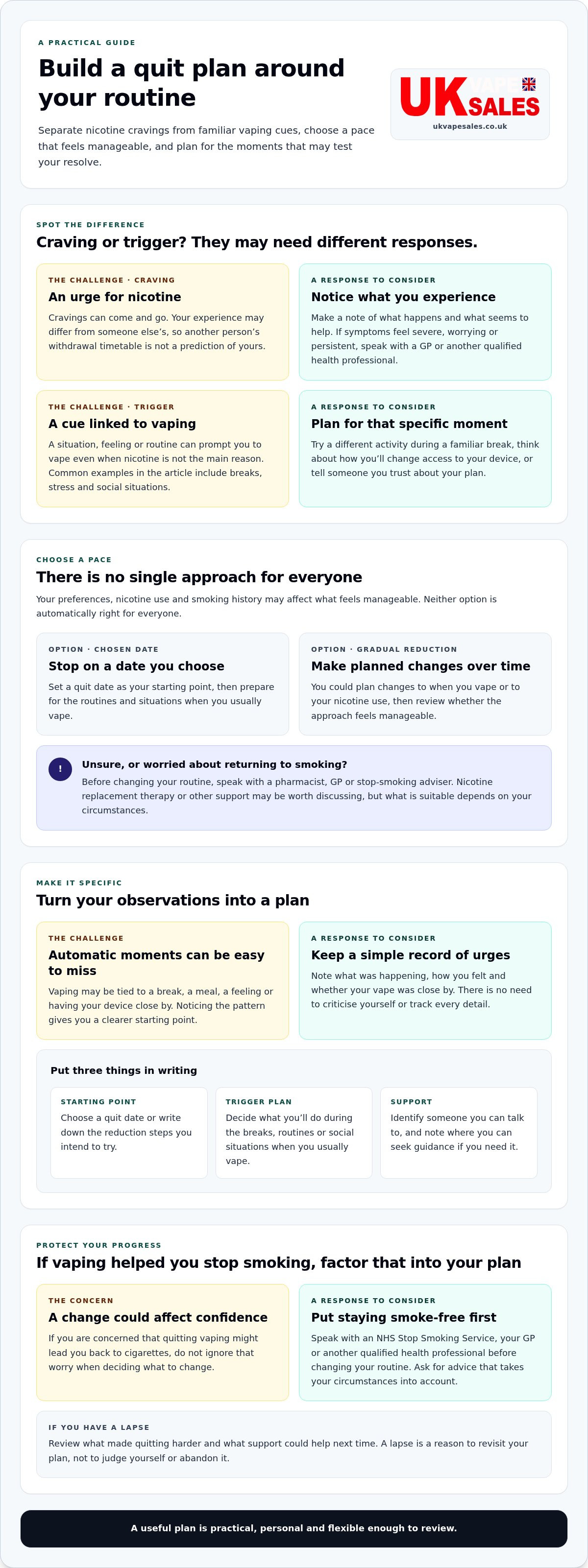
A trigger is a situation, feeling or routine linked with reaching for your vape. It can bring on an urge even when you’re not experiencing a strong nicotine craving. The two can overlap, but it helps to notice which one you’re dealing with: the response to nicotine and the habit attached to a moment may need different strategies.
A craving is an urge for nicotine; a trigger is a cue that can prompt you to vape, even when nicotine isn’t the main reason. Knowing the difference can make your plan for how to quit vaping more specific. You might discuss cravings with a health professional, while changing a familiar routine could mean taking a different kind of break.
Which situations might prompt you to vape?
For a short time, keep a simple record of when urges arise. There’s no need to criticise yourself or track every detail. Note what was happening, how you felt and whether your vape was close by. Patterns may emerge around breaks, stress, social situations or moments when vaping is easily within reach.
Use what you notice to choose a practical response. If a particular break prompts an urge, plan a different activity for that moment. If seeing or carrying your device is a cue, consider how you’ll change your access to it as you follow your quit plan. A recurring social situation may call for telling someone you trust that you’re trying to stop.
What can cravings and withdrawal feel like?
Cravings can come and go, and nicotine withdrawal may involve changes in how you feel or manage everyday routines. People’s experiences differ, so there isn’t a reliable timetable that applies to everyone. Avoid treating someone else’s account of withdrawal as a prediction of what will happen to you.
Make a note of what you experience and what seems to help. If symptoms feel severe, worrying or persistent, speak with a GP or another qualified health professional. They can help you consider appropriate support, particularly if you have health concerns or are also managing a change in smoking behaviour.
How can you make a practical plan to quit vaping?
A useful quit plan turns your intention into steps you can follow, while leaving room to adjust. Choose an approach, prepare for situations that prompt you to vape, begin and review what’s working. There isn’t one method that suits everyone. Planning can help you decide how to quit vaping in a way that fits your circumstances.
Should you stop suddenly or reduce vaping gradually?
Some people prefer to stop on a chosen date. Others would rather reduce their vaping over time, for example by making planned changes to when they vape or to their nicotine use. Neither approach is automatically right for everyone. Your preferences, level of nicotine use and smoking history may all affect what feels manageable.
If you’re unsure, or concerned that stopping could lead you back to smoking, speak with a pharmacist, GP or stop-smoking adviser before making changes. Nicotine replacement therapy or other support may be worth discussing, but what’s suitable depends on your circumstances. Don’t assume a particular product or plan is right for you without individual advice.
What belongs in a quit vaping plan?
Make the plan specific enough to act on, but flexible enough to revise. You could include:
- Your starting point: choose a quit date or write down the reduction steps you intend to try.
- Your trigger plan: decide what you’ll do during the breaks, routines or social situations when you usually vape.
- Your support: identify someone you can talk to, and note where to seek professional advice if cravings or concerns become difficult to manage.
- Your review: record what you tried, what helped and what you want to change.
Keep the steps realistic. If a planned change proves difficult, adjust it rather than treating that as proof you can’t quit. A lapse can show where your plan needs more support or a different response. If smoking is part of your history, keep staying smoke-free central to any decisions about stopping vaping.
Choose your approach, prepare for triggers, start with a realistic step, then review and adapt your plan. For more UK-focused vaping information, explore our vaping guidance.
What should you do when quitting feels difficult?
A difficult day or a return to vaping doesn’t mean you’ve failed. Treat it as information: consider what was happening, what you needed in that moment and whether your plan gave you a workable alternative. A change to your approach or more support may help you take the next step.
What if you vape again after deciding to quit?
A lapse is not the same as abandoning your plan. Try to identify the circumstances around it, such as a stressful moment, a social setting or an unexpected craving. Then choose one adjustment for next time: arrange support from someone you trust, change your routine or plan what you’ll do if the same situation arises again.
If you find yourself returning to vaping repeatedly, or the process is causing distress, seek help rather than trying to manage alone. This is especially important if you previously smoked and are worried that stopping vaping could lead you back to cigarettes. Prioritise staying smoke-free and speak to a health professional about a plan that takes your history into account.
Where can you find help in the UK?
You can contact an NHS Stop Smoking Service for advice and support. These services provide behavioural support and can discuss cessation aids; the support available may vary by area. Your GP or pharmacist can also talk through nicotine-related support and help you consider what may be suitable for you. If you have severe or worrying symptoms, seek medical advice.
For general information, visit the NHS quit-smoking guidance. If you’re unsure where to start, speak with a GP, pharmacist or stop-smoking adviser. Explain that you want to stop vaping and mention any history of smoking, so the advice can take that into account.
Keep your next step small: write down who you’ll contact or what you’ll change if an urge catches you off guard. Learning how to quit vaping can take time, and asking for help is a practical part of the process. UK Vape Sales also publishes UK-focused vaping information to help you make informed decisions.
Take your next step at your own pace
Quitting is a process, and a plan can help make it manageable. Notice the situations that prompt you to vape, choose an approach you can realistically follow and adjust it when you learn what works for you. If you’ve used vaping to stay smoke-free, protect that progress and seek personalised advice if you’re worried about returning to smoking.
You don’t need to have every answer before you begin. A small next step, such as noting your triggers or speaking with a pharmacist, GP or stop-smoking adviser, can help you move forward with more confidence. For balanced, UK-focused vaping education, explore our UK vaping guides.
Learning how to quit vaping takes patience. Keep your plan flexible, use support when you need it and take the next step at a pace that feels manageable.
Frequently Asked Questions
What if I’m not ready to quit vaping today?
You can prepare before choosing a quit date. Consider what you’d like to change, notice when vaping fits into your day and write down questions for a health professional. Taking time to understand your habits can help you make a more considered decision. If you previously smoked and are concerned about stopping, speak with a GP or stop-smoking adviser before making changes.
How can I avoid replacing vaping with another habit?
Think about what vaping does for you in a particular moment. If it gives your hands something to do, you might try holding a pen or another small object. If it marks a pause in your day, choose a different brief activity. These are examples, not guaranteed solutions. Notice whether an alternative genuinely helps or simply becomes a new routine you’d rather avoid.
Should I tell friends or family that I’m quitting?
That’s your choice, but letting someone you trust know may make it easier to ask for practical help. You could explain what you’re trying to change and say what would be useful, such as checking in or not offering you a vape. Be clear about the kind of support you want. If you’d rather keep the decision private, you can seek confidential advice from a health professional.
Can I quit vaping if I only vape occasionally?
You can make a plan even if you don’t vape every day. Consider the specific circumstances in which you vape, rather than assuming frequency alone explains the habit. For example, it may be tied to certain social occasions or situations. If you’re unsure how nicotine use affects your plan, or you have a history of smoking, ask a pharmacist, GP or stop-smoking adviser for individual guidance.
What if I’m unsure how much nicotine I use?
Don’t guess. Check the information on your vape or e-liquid packaging, if available, and make a note of how often you use it. If the details are unclear or you’re unsure how they relate to your quit plan, ask a pharmacist or GP. A clear picture of your current use can help you discuss suitable options, including whether additional support may be appropriate.
Can someone help me make a quit plan before I stop?
Yes. You can discuss your intentions and concerns with a GP, pharmacist or NHS Stop Smoking Service before changing your vaping routine. This may be particularly useful if you have health concerns, have previously smoked or feel unsure about nicotine support. You don’t have to wait until a quit attempt feels difficult to ask for advice; an early conversation can help you consider your options.