

What does vaping do to your lungs? It exposes your airways to an inhaled aerosol, not harmless water vapour. The aerosol carries particles and chemicals into the respiratory system, so vaping is not the same as breathing clean air. If you’re concerned about a cough, your smoking history or someone close to you, it helps to separate what is known from what remains uncertain.
UK health guidance says vaping poses substantially less risk than smoking in the short and medium term, but it is not risk-free. Research has identified possible effects on the lungs, while the consequences of long-term use remain uncertain. Those distinctions matter, particularly when reports from other countries or involving unregulated products are discussed.
This guide explains how vape aerosol reaches the lungs, what current evidence can and can’t tell us, and how the risks compare with smoking. It also covers symptoms that warrant medical advice and where to find relevant NHS guidance in the UK. The aim is to give you a practical, balanced way to understand the evidence without overstating what researchers know.
Key Takeaways
- To understand what does vaping do to your lungs, consider how inhaled aerosol may affect the airways and why effects can vary between people.
- Separate short-term symptoms and reported associations from evidence that proves cause and effect.
- Recognise breathing symptoms that need attention, and know when to seek urgent help or routine medical advice.
- Understand your exposure, discuss concerns with a clinician and find NHS support if you’re considering stopping.
What does vaping do to your lungs? The clear answer
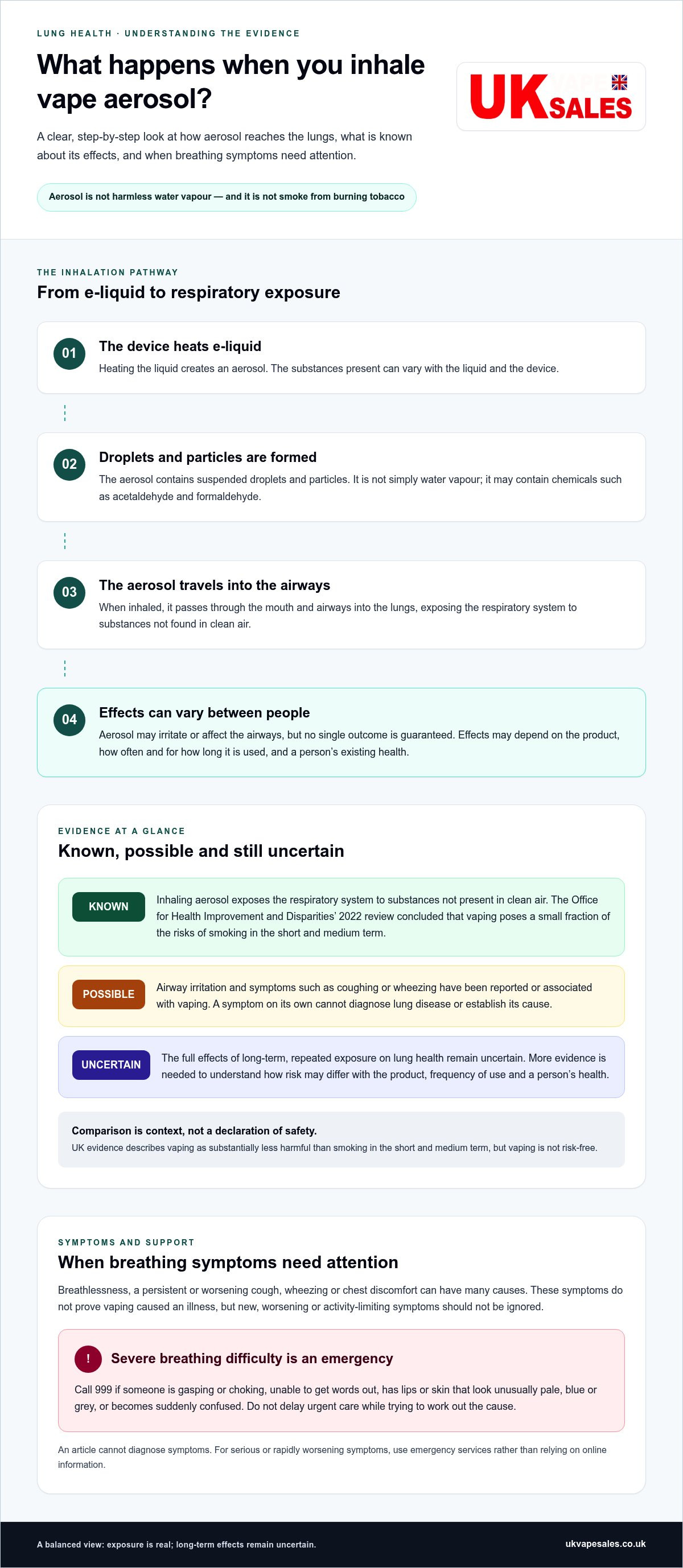
Vaping means inhaling an aerosol, not harmless water vapour. A device heats e-liquid to create an aerosol that passes through the mouth and airways into the lungs. Its particles and chemicals expose the respiratory system to substances it wouldn’t encounter in clean air. This may irritate the airways or contribute to respiratory effects, but the impact can vary between people and products.
The UK’s Office for Health Improvement and Disparities has concluded that vaping poses a small fraction of the risks of smoking in the short and medium term. That comparison does not mean vaping is risk-free. Research into longer-term effects is still developing, so some potential consequences remain uncertain.
What is vape aerosol, and how does it reach the lungs?
Heating e-liquid creates an aerosol of suspended droplets and particles that a person breathes in. It isn’t smoke from burning tobacco, but it isn’t simply water vapour either. The chemicals present can vary with the liquid and device. Public-health evidence notes that aerosol may contain substances such as acetaldehyde and formaldehyde. Exposure can differ, so it is not accurate to assume every vape produces an identical aerosol.
Does vaping affect everyone’s lungs in the same way?
No single outcome is guaranteed. The exposure and its effects may depend on the product, how often and for how long it is used, and a person’s existing health. A cough or irritation after vaping may be worth discussing with a clinician, but the symptom alone cannot establish what caused it.
A severe case report can show that a serious outcome has occurred, but it cannot tell us how often it happens or predict what will happen to every person who vapes. The US lung-injury outbreak known as EVALI was strongly linked to illicit THC products, particularly those containing vitamin E acetate. The overview of Vaping-associated pulmonary injury (VAPI) describes that condition, but it should not be treated as a forecast for all vaping or all users.
In short, aerosol exposure may irritate or affect the airways, but it does not mean every person will develop lung disease. The size of any long-term risk is not yet fully established.
How can vape aerosol affect the lungs, and what remains uncertain?
Vape aerosol exposes the airways to particles and chemicals. Some people report respiratory symptoms such as coughing or wheezing. These reports matter, but they do not by themselves prove that vaping caused the symptoms or show how likely a particular effect is. Existing lung conditions and other exposures can also be relevant.
Current evidence can identify reported symptoms and associations, but it cannot establish that vaping caused every symptom or fully describe the long-term effects of regular use. Keeping that distinction in mind helps you assess the evidence through balanced vaping guidance, without dismissing concerns or treating every possible risk as certain.
| Evidence category | What it tells us |
|---|---|
| Known | Inhaling aerosol exposes the respiratory system to substances that aren’t present in clean air. The Office for Health Improvement and Disparities’ 2022 review concluded that vaping poses a small fraction of the risks of smoking in the short and medium term. |
| Possible | Airway irritation and symptoms such as coughing or wheezing have been reported or associated with vaping. A symptom on its own cannot diagnose lung disease or identify its cause. |
| Unknown | The full effects of long-term, repeated exposure on lung health remain uncertain. More evidence is needed to understand how risk may differ with product, frequency of use and a person’s health. |
What might happen after inhaling vape aerosol?
Some people may notice irritation or respiratory symptoms, but experiences vary. A cough, for example, can have several causes, so its timing alone is not enough to determine whether vaping is responsible. Persistent or worrying symptoms deserve attention in their own right, rather than self-diagnosis based on vaping history.
What does research say about vaping compared with smoking?
For anyone asking what does vaping do to your lungs, the comparison with smoking provides context, not a declaration of safety. UK evidence reviews describe vaping as substantially less harmful than smoking in the short and medium term, but inhaling aerosol is not harmless. Findings also depend on the question a study asks, who it follows and how long people are observed. Research into short-term symptoms cannot settle questions about effects after years of use.
Which lung symptoms need attention, and when should you seek help?
Breathlessness, a persistent or worsening cough, wheezing or chest discomfort can have many causes. These symptoms do not prove vaping has caused an illness, but they should not be ignored, particularly if they are new, getting worse or affecting everyday activities. An article cannot diagnose the cause, so do not use it to decide that urgent symptoms are safe to wait out.
When should breathing symptoms prompt urgent medical help?
Follow NHS emergency guidance if someone is struggling to breathe severely. Call 999 if they are gasping or choking, unable to get words out, or their lips or skin look unusually pale, blue or grey. Sudden confusion is also an emergency warning sign. Do not assume these symptoms are caused by vaping, and do not delay urgent care while trying to work out the cause.
For NHS advice on breathlessness and when to get help, see the NHS guidance on shortness of breath. If symptoms are serious or rapidly worsening, use emergency services rather than relying on online information.
What should you do about persistent or changing symptoms?
If breathing symptoms persist, worsen or concern you, arrange clinical advice through your GP or an appropriate urgent care service. A clinician can assess your symptoms in context. Be ready to explain when they began, whether they are changing, how often you vape and whether you have an existing lung condition or relevant smoking history. These details can inform an assessment, but they do not establish the cause on their own.
If you’re asking what does vaping do to your lungs because you’ve developed symptoms, focus first on getting appropriate medical advice rather than self-diagnosing. Use these steps as a guide, not a substitute for care:
- Call 999 for severe breathing difficulty or other emergency signs described above.
- Seek clinical advice for symptoms that are persistent, worsening or worrying, using local urgent care if they need prompt attention.
- Share relevant details about vaping, smoking, symptom changes and existing health conditions with the healthcare professional.
Clear, balanced vaping health guidance can help you prepare questions, but it cannot assess your breathing. Seek medical help when symptoms call for it.
What can you do if you are worried about vaping and your lungs?
Start with what you know about your own exposure and health, rather than assuming a symptom has one cause. Note what you use, how often, when symptoms began and whether they change. If you’re concerned about your breathing, discuss this information with a healthcare professional. Do not use general advice to set a supposedly safe level of vaping: no risk-free pattern can be promised.
How can someone reduce exposure or decide whether to stop?
You can consider whether you want to stop vaping and what support would make that manageable. A GP, pharmacist or stop smoking service can help you discuss your circumstances, including existing health conditions and any smoking history. For tailored advice, the NHS explains vaping as a tool some adults use to stop smoking. If you smoke, do not let concern about vaping lead you back to smoking. Seek support to avoid that risk and discuss the options with a health professional.
If stopping is your goal, a separate guide to quitting vaping can help you think through the process. This is distinct from advice for people trying to stop smoking, and personal circumstances may affect what support is suitable.
Where can UK readers find reliable vaping health guidance?
Use current NHS and UK public-health information for general guidance, and speak with a clinician about personal symptoms or decisions. Tell them about both vaping and smoking, including any changes you’ve made. This context can help them understand your situation, but only an appropriate clinical assessment can advise you about your health.
This article offers general information, not a diagnosis or a substitute for professional medical advice. If symptoms are severe or getting worse, follow the urgent-care advice in the previous section rather than waiting for an online answer.
To understand what does vaping do to your lungs in the context of smoking cessation, read the NHS guidance on using e-cigarettes to stop smoking. It provides UK-specific information to consider alongside your own circumstances.
The evidence on vaping and lung health is still developing. A measured next step is to understand your exposure, seek clinical advice when concerned, and choose support that takes account of whether you smoke or are trying to stop.
Keep your next step grounded in good information
Questions about what does vaping do to your lungs rarely have a simple, one-size-fits-all answer. As you read more, look for guidance that explains what the evidence can establish, where uncertainty remains and whether the advice applies to the UK. This makes it easier to assess new claims without letting a dramatic headline stand in for the full picture.
If you’re weighing a personal decision, use reliable information to prepare questions that reflect your circumstances. For symptoms or concerns about your health, an article can inform you, but it cannot replace advice from a healthcare professional.
UK Vape Sales’ educational articles are specialist-authored and focused on balanced, UK-specific information. Explore UK Vape Sales’ vaping guides for more considered reading and practical information.
Frequently Asked Questions
Is vaping bad for your lungs?
Vaping isn’t risk-free, but a person’s lung health cannot be predicted from vaping alone. If you’re discussing it with a healthcare professional, note what you use, how often, and whether you have a relevant health history. For general information about vaping as a way some adults stop smoking, consult the NHS guidance on e-cigarettes. It can help you prepare questions, but it cannot assess your personal health.
Can vaping cause lung damage?
An online account or symptom list cannot reliably determine the cause of a lung problem. If you’re worried, note when the issue began and whether anything changed around that time, such as your vaping pattern or general health. This gives a healthcare professional useful context without treating timing as proof. Another person’s case cannot predict what will happen to you.
What happens to your lungs when you stop vaping?
There is no single timetable that can predict how someone will feel after stopping. If you’re considering it, think about what makes vaping part of your routine and what support would suit your circumstances. If you also smoke or have recently stopped smoking, mention that when seeking advice so support can take both habits into account. A dedicated quitting-vaping guide can help with practical planning without replacing tailored support.
Can vaping cause a cough or shortness of breath?
If you notice a cough or breathlessness, record when it happens, how long it lasts and whether it affects particular activities. This can help you describe the pattern when seeking medical advice, but it cannot identify the cause. Use the NHS advice on shortness of breath to check warning signs. If someone has severe difficulty breathing, call 999 rather than waiting to see if it passes.
Is vaping safer for your lungs than smoking?
UK guidance presents vaping as an option some adults use to stop smoking, not as a reason for people who do not smoke to begin. If you smoke and are weighing up your options, discuss the approach with a stop smoking adviser or healthcare professional. The NHS information on vaping to stop smoking can help you understand the UK advice and prepare for that conversation.
Do vape aerosols affect people nearby?
If someone in your household has a particular health concern, do not rely on a general article to judge their individual circumstances. Consider discussing the situation with their healthcare professional and consult current NHS or UK public-health advice. The NHS advises against vaping around children and babies as a precaution. For other settings or specific circumstances, check current guidance rather than assuming one general answer applies to everyone nearby.