

You might think that a larger device producing more vapour always leads to a better experience, but the opposite is often true. Having MTL vs DTL vaping explained in clear terms is the quickest way to avoid a harsh throat hit or buying the wrong e-liquid for your kit. Mouth-to-Lung (MTL) vaping mimics the tight draw of a traditional cigarette, making it the most effective choice for those transitioning away from smoking. In contrast, Direct-to-Lung (DTL) involves inhaling vapour directly into the lungs, which suits people who prefer thicker clouds and lower nicotine strengths.
It is natural to feel overwhelmed by technical jargon when you simply want a reliable way to satisfy your nicotine cravings. This guide clears up that confusion by showing you how each style affects your daily habit and your budget. You will learn how to pair the right liquids with modern hardware, such as refillable pod systems, to ensure your setup remains satisfying and cost-effective under the latest UK vaping duty regulations. By the end, you will know exactly which path suits your journey.
Key Takeaways
- Understand the fundamental difference between Mouth-to-Lung and Direct-to-Lung inhalation to ensure you choose a device that matches your natural habit.
- Discover how to achieve a satisfying throat hit or large vapour clouds by matching your inhalation style to the correct hardware and airflow.
- Get MTL vs DTL vaping explained by looking at technical details like coil resistance and power settings to avoid damaging your equipment or experiencing leaks.
- Learn how to pair e-liquids correctly, ensuring you use nicotine salts for MTL kits and high-VG shortfills for DTL setups to prevent harsh hits.
- Find out why modern, TPD-compliant systems like the Lost Mary BM6000 are the most efficient choices for those seeking a familiar and sustainable experience.
What is the Difference Between MTL and DTL Vaping?
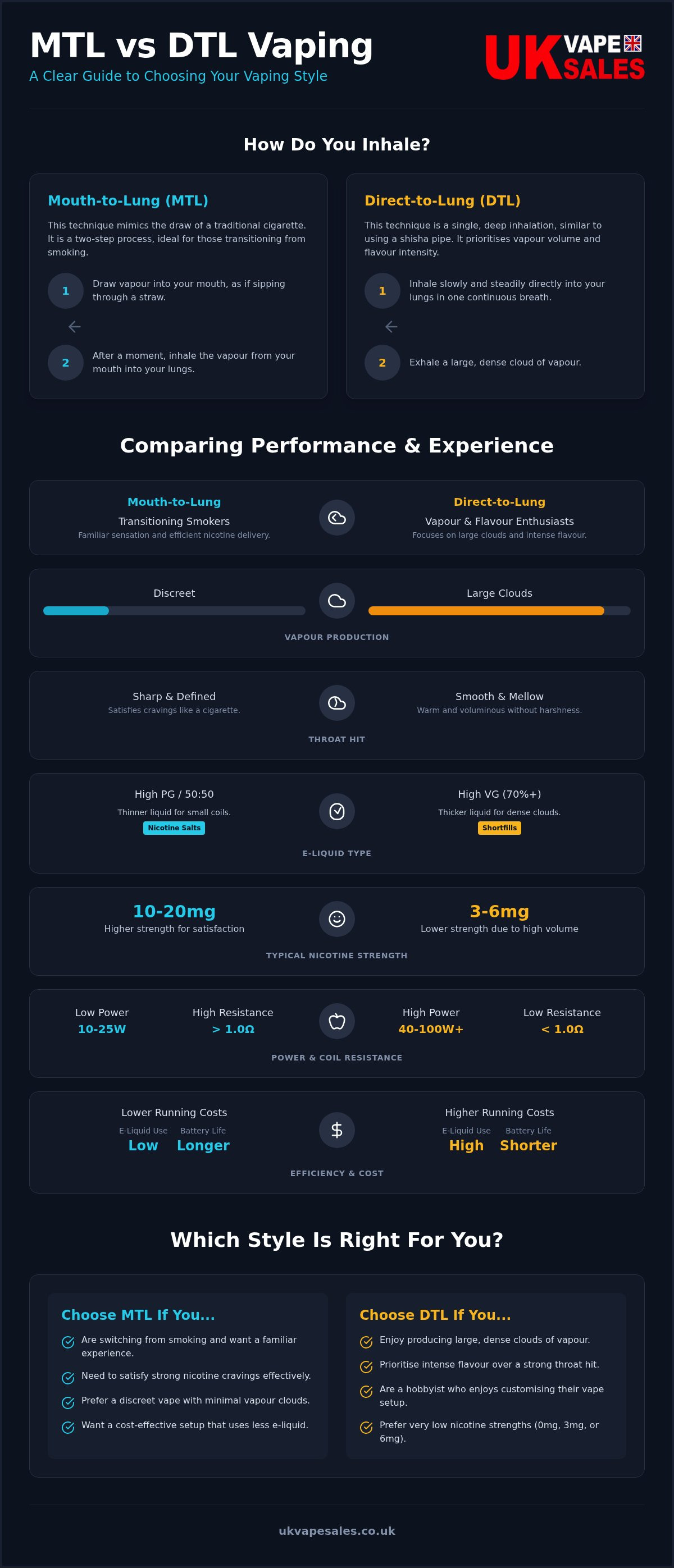
MTL and DTL represent the two primary ways to use a vape. Understanding these terms is essential because they dictate the type of kit you buy and the e-liquid you use. To get MTL vs DTL vaping explained simply, think of the difference between sipping through a narrow straw and taking a deep breath of fresh air. MTL (Mouth-to-Lung) mimics the action of smoking a cigarette, whilst DTL (Direct-to-Lung) is more akin to using a shisha pipe.
When you understand what an electronic cigarette is and how it functions, you see that the inhalation style changes how the coil heats the liquid. Choosing the wrong style for your device can lead to leaks, burnt coils, or an uncomfortably harsh sensation in your throat. Having MTL vs DTL vaping explained correctly ensures you don't waste money on a setup that doesn't feel right for your needs.
Mouth-to-Lung (MTL): The Natural Starting Point
This style involves drawing vapour into your mouth, holding it for a moment, and then inhaling it into your lungs. It provides a tight draw with noticeable resistance, much like a traditional cigarette filter. Because it replicates the physical sensation of smoking so closely, it is often the most successful method for those switching to vaping in the UK.
MTL setups typically use:
- Higher nicotine strengths to satisfy cravings efficiently.
- Nicotine salts or liquids with a higher Propylene Glycol (PG) content for a defined throat hit.
- Low-power devices like the Lost Mary BM6000, which are designed for discreet vapour production.
Direct-to-Lung (DTL): Prioritising Vapour and Flavour
DTL vaping skips the mouth-hold entirely. You take a long, steady breath straight into your lungs. This requires an airy draw with very little resistance. It is a favourite for hobbyists who enjoy producing large plumes of vapour and experiencing intense flavour profiles. The sensation is smoother and warmer than MTL, but it requires specific adjustments to remain comfortable.
Because you inhale a larger volume of vapour, you must use lower nicotine levels, usually 3mg or 6mg, to avoid an overwhelming hit. This style also requires high Vegetable Glycerin (VG) liquids, often found in e-liquid shortfills, which are thick enough to produce the dense clouds DTL vapers expect.
MTL vs DTL: Comparing Performance and Experience
Choosing between these styles significantly impacts your daily routine and your wallet. When we have MTL vs DTL vaping explained in terms of performance, the differences in throat hit and vapour volume are immediate. MTL provides a sharp, concentrated hit at the back of the throat that satisfies former smokers. Conversely, DTL offers a smoother, more voluminous experience that feels substantial without being harsh. Because DTL devices operate at much higher wattages, they produce large plumes of vapour, whereas MTL kits are designed for discreet public use.
Efficiency is another major factor. MTL devices use e-liquid sparingly, making them a cost-effective choice. DTL setups consume liquid at a much faster rate, often requiring multiple refills a day. This high power demand also means DTL batteries deplete quickly, whilst low-power MTL kits can often last an entire day on a single charge.
E-Liquid Compatibility: PG vs VG Ratios
The thickness of your liquid must match your inhalation style. MTL coils have small wicking holes and require thinner liquids, typically a 50/50 ratio or high PG. If you use a thick DTL liquid in an MTL kit, you risk burnt coils because the liquid cannot reach the heating element fast enough. DTL tanks need high VG ratios, usually 70% or more, to create dense clouds and prevent the liquid from leaking through the larger airflow vents.
Nicotine Salts vs Freebase Nicotine
The type of nicotine you choose is just as important as the device itself. Nicotine salts are the preferred partner for MTL vaping because they allow for higher nicotine strengths without the aggressive throat sting. This makes them ideal for managing cravings effectively. Traditional freebase nicotine is often favoured by those who want a more noticeable throat hit at lower strengths. For DTL vaping, most users stick to low-strength freebase liquid to keep the inhale smooth. Having MTL vs DTL vaping explained helps you select the right liquid for your setup. If you are looking for the best balance of flavour and vapour for a sub-ohm kit, exploring our range of e-liquid shortfills is a great place to start.
The Technical Side: Coils, Airflow, and Power
To have MTL vs DTL vaping explained from a technical perspective, you must understand the relationship between resistance and power. MTL kits utilise high-resistance coils, typically 1.0Ω (ohm) or higher, which operate at low wattages between 8W and 15W. In contrast, DTL setups use "sub-ohm" coils with a resistance below 1.0Ω. These require significantly more power, often ranging from 40W to over 100W, to vaporise thicker liquids effectively. Ohm's Law is the physical principle that defines the relationship between voltage, current, and resistance, ensuring your device generates the correct amount of heat while remaining within safe battery limits.
A frequent point of confusion is why nicotine strength must change between these two styles. Because a DTL device operates at higher wattages, it vaporises a much larger volume of e-liquid in a single second than an MTL kit. This means you inhale far more nicotine per puff in a DTL setup. If you were to use a high-strength 20mg salt in a sub-ohm kit, the experience would be unpleasantly harsh and could lead to a nicotine headache. This is why DTL vapers typically stick to 3mg or 6mg strengths, whilst MTL users can comfortably use higher concentrations.
Airflow Control: The Secret to a Perfect Draw
Adjustable airflow is the primary tool for fine-tuning your inhalation. MTL vapers require a restricted airflow to create the suction needed for a concentrated, intense hit. DTL vapers need wide-open vents to provide a cooling effect, which prevents the vapour from becoming uncomfortably hot at high wattages. RDL (Restricted Direct Lung) acts as a bridge between the two, offering a slightly tighter DTL draw that balances flavour intensity with cloud production.
Coil Design and Wicking
The physical build of a coil dictates which e-liquid it can handle. MTL coils feature small juice ports designed for thin 50/50 liquids. DTL coils have large ports and a massive surface area to soak up high-viscosity VG liquids quickly. Modern mesh coils have improved the experience for both styles by heating the liquid more evenly, which results in cleaner flavour and a longer coil lifespan. If you are looking for a reliable MTL device that manages these technical settings automatically, the IVG Pro 12 vape kit provides a consistent and satisfying experience without the need for manual adjustments.
Choosing Your Path: Modern UK Vaping Solutions
Your choice depends on your ultimate goal. If you want to replicate the sensation of smoking to stay off tobacco, a Mouth-to-Lung setup is the logical path. If you are more interested in flavour depth and vapour volume, Direct-to-Lung is the way forward. Having MTL vs DTL vaping explained in the context of the 2026 UK market is vital, as the ban on single-use disposables has made high-capacity, refillable pod systems the new standard for reliability and value.
For those transitioning, the Lost Mary BM6000 is a premier choice. It offers the same simplicity as old single-use products but with a more sustainable, TPD-compliant design that uses a 10ml refill container. Similarly, the IVG Pro 12 provides consistent MTL satisfaction, ensuring that your nicotine needs are met without the complexity of traditional mod and tank setups. These devices are designed to be intuitive, allowing you to focus on your journey rather than technical settings.
The Best MTL Setups for Beginners
If convenience is your priority, prefilled pod kits are the easiest entry point. They remove the need for manual refilling whilst maintaining the tight draw essential for smokers. Pairing a kit like the SKE Bar Original with 10mg or 20mg nicotine salts creates an authentic cigarette feel. These strengths are the standard for transitioners because they provide a quick nicotine delivery that effectively curbs cravings without the harshness of high-strength freebase liquids.
Stepping into DTL: What to Expect
Moving into DTL vaping involves a shift toward larger hardware and e-liquid shortfills. These larger bottles are nicotine-free, allowing you to add nicotine shots to reach your preferred low strength, typically 3mg. We often recommend starting with a pod kit capable of Restricted Direct Lung (RDL) before investing in a full DTL mod. This allows you to test the sensation of a looser draw without a steep learning curve. Keep in mind that DTL requires more maintenance, including regular coil changes and tank cleaning, to keep the flavour crisp and prevent leaks. Getting MTL vs DTL vaping explained clearly helps you decide if you are ready for this more involved, hobbyist style of vaping.
Start Your Vaping Journey With Confidence
Choosing the right inhalation style is the most important decision you'll make when moving away from combustible tobacco. As this look at MTL vs DTL vaping explained shows, the key is matching your personal goals to the correct hardware. If you want a familiar, tight draw that manages cravings effectively, a Mouth-to-Lung pod kit is your best ally. For those who prioritise rich flavour and impressive vapour plumes, a Direct-to-Lung setup offers a more substantial experience.
By pairing the right e-liquid with TPD-compliant 2026 hardware, you ensure a satisfying and sustainable habit. Whether you are looking for a simple prefilled system or a versatile refillable kit, our collection is designed to meet every need. You can explore our curated range of MTL and DTL Vape Kits to find a setup that fits your lifestyle. Our team provides expert UK-based support and we offer free UK shipping on qualifying orders to make your transition as smooth as possible. You have the knowledge now; it's time to find the device that makes staying smoke-free effortless.
Frequently Asked Questions
Is MTL or DTL better for quitting smoking?
MTL is widely considered the best style for quitting smoking because it closely replicates the physical sensation and inhalation technique of a traditional cigarette. Having MTL vs DTL vaping explained in terms of habit shows that the restricted draw and defined throat hit of MTL help satisfy cravings more effectively. Most successful switchers start with an MTL pod kit and high-strength nicotine salts to ensure their needs are managed during the initial transition period.
Can I use nicotine salts in a DTL vape kit?
You should avoid using high-strength nicotine salts in a sub-ohm DTL kit. Because DTL devices operate at much higher wattages and produce significantly more vapour, you would inhale a concentrated dose of nicotine that is likely to cause a headache or nausea. If you prefer the smooth hit of salts in a DTL setup, only use very low strengths, though most DTL vapers choose freebase nicotine for better compatibility with high-viscosity liquids.
What happens if I use high VG liquid in an MTL pod?
Using high VG liquid in an MTL pod often results in dry hits and prematurely burnt coils. MTL coils feature small wicking ports designed for thinner 50/50 e-liquids, whereas high VG juice is too thick to saturate the cotton quickly enough between puffs. This causes the heating element to singe the dry wick, ruining the flavour and the coil. Always check your coil resistance to ensure your liquid viscosity is a suitable match for your hardware.
Is DTL vaping more expensive than MTL?
DTL vaping is typically more expensive over the long term. High-wattage devices consume e-liquid at a much faster rate, meaning you will need to purchase shortfills more frequently. This is a key factor when having MTL vs DTL vaping explained for budget-conscious users. Since the 2026 UK Vaping Products Duty took effect, the cost of high liquid consumption has made efficient MTL setups a significantly more economical choice for daily use across the United Kingdom.
What is RDL vaping and who is it for?
RDL stands for Restricted Direct Lung, acting as a middle ground between the two primary styles. It involves inhaling directly into the lungs but with a tighter airflow that provides more resistance than a standard DTL draw. This style is perfect for vapers who want more flavour intensity and vapour than an MTL kit offers, without the massive clouds and high power requirements of a full sub-ohm setup. It is a popular choice for experienced users.
Do I need to change my nicotine strength when switching from MTL to DTL?
Yes, you must lower your nicotine strength when switching to DTL. Because you inhale a far greater volume of vapour in a single breath, the actual amount of nicotine entering your system is much higher. A vaper using 20mg in an MTL kit will usually drop to 3mg or 6mg for DTL to maintain a smooth experience. Failing to lower the strength often leads to an uncomfortably harsh throat hit and potential nicotine over-consumption.