

Nicotine may quiet hunger, but that doesn’t make vaping a safe or dependable way to lose body fat. So, does vaping make you lose weight? It may suppress appetite for some people, but a change in hunger isn’t the same as sustained fat loss. A lower number on the scales can have several causes and doesn’t show that vaping has reduced body fat.
If you’re concerned about weight changes after stopping nicotine, it’s understandable to have questions. Appetite and eating habits can shift, but the pattern isn’t the same for everyone. Starting or continuing to vape for weight control carries health risks and isn’t recommended.
This guide separates nicotine’s possible effects on appetite from actual weight loss. It explains why weight may change when nicotine use stops and outlines sensible next steps if you’re worried about your weight or thinking about quitting. The key point is that nicotine may affect hunger, but vaping isn’t a weight-loss tool.
Key Takeaways
- Does vaping make you lose weight? Nicotine may affect appetite, but that doesn’t mean vaping causes lasting changes in body fat.
- Consider eating patterns and personal circumstances alongside nicotine when thinking about weight changes.
- After stopping nicotine, appetite or routines may shift, but weight gain isn’t inevitable.
- If you’re concerned about your weight, identify what’s worrying you and seek appropriate health support rather than relying on vaping.
- If you’re thinking about quitting, the NHS guide offers practical next steps.
Does vaping make you lose weight? The short, honest answer
No. Vaping isn’t a reliable or recommended way to lose weight. Nicotine may affect appetite for some people, but a temporary change in hunger doesn’t prove lasting fat loss or mean someone’s weight will change in a predictable way.
The question “does vaping make you lose weight” can sound as if vaping has a consistent effect. It doesn’t. Vaping products vary, and some contain nicotine while others don’t. People also differ in their appetite, eating habits and response to nicotine. A change in appetite or a fluctuation on the scales can’t, by itself, show that vaping caused fat loss.
Does nicotine reduce appetite?
Nicotine may influence appetite and make some people feel less hungry for a time. The effect varies, and it shouldn’t be treated as a way to manage weight. Nicotine is addictive, and an appetite change is a side effect, not evidence that vaping provides healthy or lasting weight reduction. The Nicotine reference describes its effects and addictive properties, but it doesn’t make nicotine a weight-management treatment.
Why appetite effects don’t make vaping a weight-loss method
Feeling less hungry at one point doesn’t tell you what will happen to your body weight over time. Appetite and weight are influenced by more than one factor, and one person’s response to nicotine can’t predict someone else’s. Vaping for weight control also means taking up or continuing nicotine use for a purpose it isn’t recommended for.
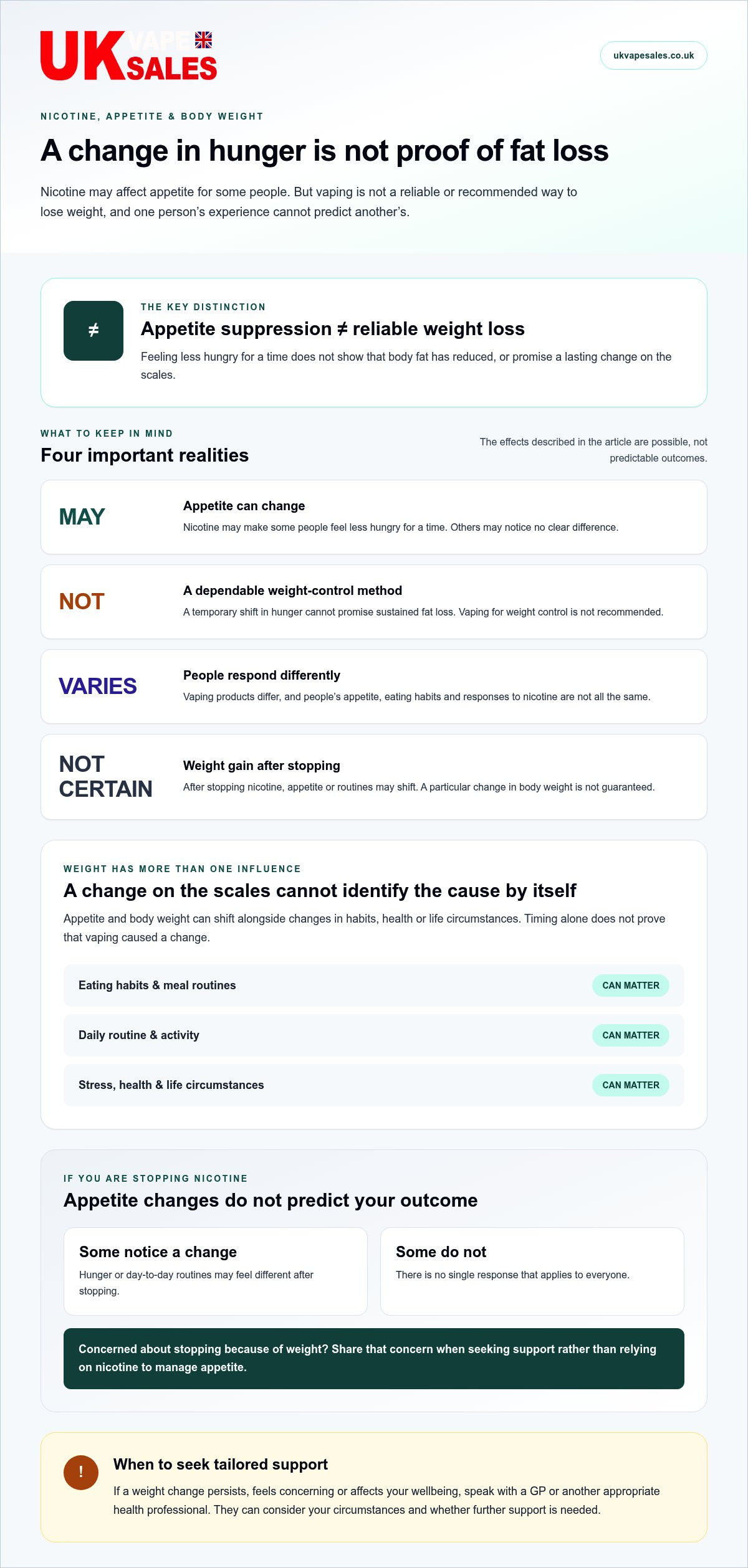
Appetite suppression is not the same as reliable weight loss. Keep that distinction in mind if you’re considering vaping because of concerns about your weight. A short-lived shift in hunger can’t promise sustained fat loss, and it isn’t a safe plan to depend on. Instead, identify what’s concerning you and seek appropriate support rather than using nicotine to try to change your appetite.
How nicotine, appetite and body weight may be connected
Nicotine is one possible influence on appetite, but it doesn’t explain body weight on its own. What someone eats, their daily routine and their individual circumstances can all matter. If appetite or weight changes while someone vapes, the timing alone can’t show that vaping caused the change.
People may describe different experiences: one might notice less hunger, whilst another notices no clear difference. These accounts can help explain how individuals feel, but they can’t establish a predictable effect for everyone. Research into attitudes towards e-cigarettes for weight control explores what people think about this use; it shouldn’t be read as proof that vaping produces weight loss.
What might change appetite when someone uses nicotine?
Some people may notice a change in hunger after using nicotine, but the experience varies. Appetite can also shift for reasons unrelated to nicotine, including changes in meal routines, stress or health. A personal observation can’t tell you whether nicotine was the cause or whether the change will continue.
It’s important not to treat a possible appetite effect as proof of a particular process in the body. Claims that nicotine changes metabolism or causes body-fat reduction shouldn’t be presented as settled fact without reliable evidence for that specific explanation.
Why weight changes can’t be pinned on vaping alone
Body weight can change alongside shifts in eating habits, activity, health or life circumstances. Several factors may overlap, making it difficult to identify one cause from a change on the scales or a difference in appetite. That’s why the question “does vaping make you lose weight” can’t be answered by relying on one person’s experience.
Body weight is shaped by multiple factors, so a change during vaping doesn’t prove vaping caused it. If you’re trying to understand a change in your own weight, consider what else has changed and seek appropriate health advice if you’re concerned. Don’t use nicotine as a test or as a way to manage your appetite.
What can happen to appetite and weight when you stop vaping?
After stopping vaping, some people notice that their appetite or daily routines feel different. If the product contained nicotine, changes in hunger may be part of the experience, but there’s no single response that applies to everyone. Changes to routines around vaping may also affect how someone feels day to day.
It can be difficult to think about stopping and worry about weight at the same time. Those concerns are real, but they don’t mean you should assume that quitting will lead to weight gain or put off a quit attempt solely because you’re worried about it. Weight changes have several possible influences, and appetite changes alone can’t predict an individual outcome.
Are weight changes after quitting guaranteed?
No. Some people may notice a change in appetite; others may not. Even if hunger changes, a particular change in body weight isn’t certain. Don’t treat someone else’s experience as a forecast for your own. If you’re considering stopping, reliable UK health guidance can help you think through the process. A step-by-step guide to quitting vaping can also help you plan for the practical side of stopping.
Fear of a possible weight change needn’t be the only factor in your decision. If the concern is making quitting feel difficult, mention it when seeking support rather than relying on nicotine to manage your appetite.
When weight concerns deserve tailored support
If a weight change persists, feels concerning or is affecting your wellbeing, speak with a GP or another appropriate health professional. They can consider your circumstances and help you work out whether further support is needed. This can be particularly useful if the change coincides with other health or life changes, as several factors may be involved.
A clinician can assess possible causes in your individual circumstances; appetite changes alone can’t explain what’s happening. You don’t need to guess or change your nicotine use to work it out. Describe what you’ve noticed and when, and ask what support is suitable for you.
What to do if vaping or weight loss is on your mind
If weight is a concern, keep the next steps straightforward: don’t use vaping to try to control it, identify what’s worrying you, then seek support suited to that concern. The answer to “does vaping make you lose weight” isn’t a reason to start or continue using nicotine.
- Don’t rely on vaping for weight control. Nicotine may affect appetite, but vaping isn’t a weight-management treatment.
- Pinpoint your concern. Is it a recent change, worry about stopping nicotine or uncertainty about managing your weight? Being clear about the question can help you explain it when seeking support.
- Talk to an appropriate health professional. A GP or another qualified professional can discuss weight concerns in light of your circumstances. If a change is unexplained or worrying, seek individual advice rather than trying to diagnose its cause yourself.
If you’re thinking about vaping to manage your weight
Don’t start vaping, or continue vaping, as a weight-loss strategy. If you’re concerned about your weight, discuss it with a qualified health professional who can help you consider appropriate support. Nicotine products shouldn’t be used as a substitute for care or advice tailored to you.
If you want to stop vaping
For practical quitting support, consult current NHS guidance on stopping vaping. It covers approaches to quitting and managing cravings. You can also use the site’s step-by-step guide to quitting vaping for further general information. If stopping feels difficult, consider speaking to a health professional about support that may suit your situation.
You don’t have to settle every concern about weight before taking a step towards quitting. If you’re unsure what to do, start by raising the concern with someone qualified to advise you. A change in appetite or weight doesn’t have one automatic explanation, and asking for help is a sensible way to get clearer guidance.
Take the information at your own pace. Explore the site’s educational guidance for clear, balanced information about vaping and nicotine, without treating vaping as a route to weight loss.
Choose a next step that supports your wellbeing
Make your next step a clearer question. For example, note whether you’re curious about nicotine’s effects, planning to stop vaping or trying to understand a weight change. This can help you find guidance that addresses your concern instead of getting caught up in broad claims. The question “does vaping make you lose weight” deserves careful, evidence-led information, not a quick promise.
UK Vape Sales provides UK-focused educational guidance written by an experienced vaping specialist, with a calm and balanced approach. Explore UK Vape Sales’ practical vaping guidance to find a useful next read and build a clearer understanding at your own pace.
Frequently Asked Questions
Can vaping burn body fat?
Vaping isn’t a method shown to burn body fat. A change on the scales can’t tell you whether body fat has changed, because a weight reading reflects the body’s total weight, not its composition. If you’re monitoring a change, note when it happens and what else has changed in your routine. A health professional can help you decide whether it needs further assessment.
Does nicotine-free vaping affect your weight?
Nicotine-free vaping contains no nicotine, so nicotine itself can’t explain an effect. However, that doesn’t establish that vaping without nicotine has no possible relationship to weight for every person. Evidence doesn’t support treating it as a way to lose weight or control appetite. If you use a nicotine-free vape and notice a change, consider the timing alongside other changes in your routine rather than assuming a direct link.
Can vaping help you avoid gaining weight after quitting smoking?
Vaping shouldn’t be chosen to prevent weight gain. For adults who smoke, it may be part of a plan to stop smoking, but weight management is a separate concern. Nicotine replacement therapy, such as patches or gum, is a licensed treatment to help people stop smoking. Evidence suggests it may slightly limit weight gain during treatment, though any longer-term effect is uncertain. A clinician can discuss suitable quit-smoking support.
Should I vape to suppress my appetite?
No. If you’re tempted to vape because you’re worried about hunger or weight, pause and identify what you want help with: appetite, eating patterns or weight itself. You could note when the concern arises and discuss that information with a qualified health professional. This gives them a clearer starting point for advice without making nicotine part of your weight-management plan.
Can vaping affect your weight even if you do not notice an appetite change?
Not noticing a change in hunger doesn’t rule out changes in other routines, such as meal timing or activity. Nor does it show that vaping is responsible for a change in weight. To make sense of the timing, note when the change began and any relevant routine changes you’ve noticed. This may help you explain the situation if you seek health advice.
Who should I speak to about weight changes after stopping vaping?
For a weight change that concerns you, your GP is a sensible first point of contact. If your main difficulty is stopping vaping, look for current NHS quitting guidance or ask a health professional what support is available. These are related but distinct concerns, so you can raise both. You don’t need to decide for yourself whether stopping nicotine caused the change before asking for help.