

Can you use any nic salt in any pod? No. A nic salt that suits one pod may not suit another because compatibility depends on the device’s design, coil and power, not just the liquid label.
It’s easy to be unsure when instructions mention resistance or e-liquid ratios without explaining what they mean. First check whether your pod is refillable. Sealed or prefilled pods aren’t intended for bottled e-liquid unless the manufacturer specifically says otherwise. For a refillable pod, follow the device guidance before choosing a nic salt.
This guide explains what to check before filling, including the pod type, coil resistance, device power and e-liquid information. It also explains why a liquid suited to one device may not be right for a more powerful pod system. Use these checks to make an informed choice instead of guessing and risking poor performance or wasted e-liquid.
Key Takeaways
- When asking “can you use any nic salt in any pod”, the answer is no: check the guidance for your specific device and pod first.
- Confirm the exact device and pod model, then check the coil resistance and e-liquid ratio recommended by the manufacturer.
- Make sure the pod is refillable before opening it or adding bottled e-liquid.
- If performance seems poor, don’t assume the liquid is at fault. Stop using the pod if it behaves unexpectedly and consult the device guidance.
Can you use any nic salt in any pod? The short answer
No. Don’t assume every nic salt suits every pod. Before choosing a liquid, check that the pod is designed to be refilled and that the device instructions allow that type of e-liquid. The label “nic salt” alone doesn’t confirm compatibility.
It helps to separate device compatibility from nicotine preference. The liquid must suit the pod and device, while nicotine strength is a separate choice. A strength you prefer won’t make an otherwise incompatible liquid suitable for the hardware.
Does the pod refill, or is it prefilled?
Check the packaging and instructions for the exact device. A refillable pod should have a filling method described by its manufacturer, such as a designated fill point. A sealed, prefilled pod is supplied with e-liquid and isn’t intended for user refilling. Don’t try to open or refill it based on appearance alone. If you can’t tell which type you have, pause and check the device guidance before adding liquid.
Why pod systems are not universally interchangeable
Pod systems differ in their construction and in the e-liquids their manufacturers specify. Some are designed to be filled by the user; others are not. Even among refillable pods, don’t assume the same liquid will suit every model. Check the instructions for your exact device and pod instead of relying on a general rule or another pod’s guidance.
The term “nic salt” describes the type of nicotine in the liquid. It doesn’t guarantee that the liquid will work in any device. For background, Nicotine salts explains how nicotine salts differ from other forms of nicotine. This can help you understand the label, but it doesn’t establish whether a particular liquid is suitable for your pod.
So, if you’re wondering, “can you use any nic salt in any pod?”, the practical answer is no. First confirm the pod is refillable, then follow the device maker’s compatibility guidance. The checks below can help you choose without guessing.
What determines whether nic salts suit a pod?
For a refillable pod, suitability depends on the pod’s design, its coil and the e-liquid. A bottle’s “nic salt” label doesn’t tell you whether the liquid is right for your device. The manufacturer’s guidance for the exact device and pod is the deciding reference.
How coil resistance and device design affect compatibility
Coil resistance, measured in ohms, describes how the coil responds electrically. It’s one part of how a device operates, alongside its power and overall design. Different setups may be intended for different kinds of e-liquid, so resistance on its own can’t confirm compatibility.
Look in the device or pod instructions for the recommended e-liquid type. Don’t apply a rule you’ve heard about another pod or assume a particular nic salt strength suits a coil based only on its resistance. If the guidance doesn’t clearly cover your liquid, check with the manufacturer before filling.
Why the PG and VG ratio matters
PG (propylene glycol) and VG (vegetable glycerine) are the main base ingredients in many e-liquids. They differ in thickness, and their balance can affect how a liquid moves through a pod. A liquid that doesn’t match the device’s requirements may not perform as intended.
Check the PG/VG ratio on the bottle and compare it with the ratio or e-liquid type specified in the device guidance. Don’t guess based on the flavour or the nic salt label, and don’t assume a ratio recommended for one pod will suit another.
Nicotine strength is a separate consideration from hardware compatibility. This guide can’t choose a strength for you, and your preferred strength doesn’t establish that the liquid suits the pod. For UK product rules, see the GOV.UK guidance on e-cigarette regulations. For compatibility, use your device instructions.
In short, “can you use any nic salt in any pod?” No. Check the pod, coil and liquid requirements together before filling. Once you’ve confirmed what your device accepts, you can compare nic salts with those requirements in mind.
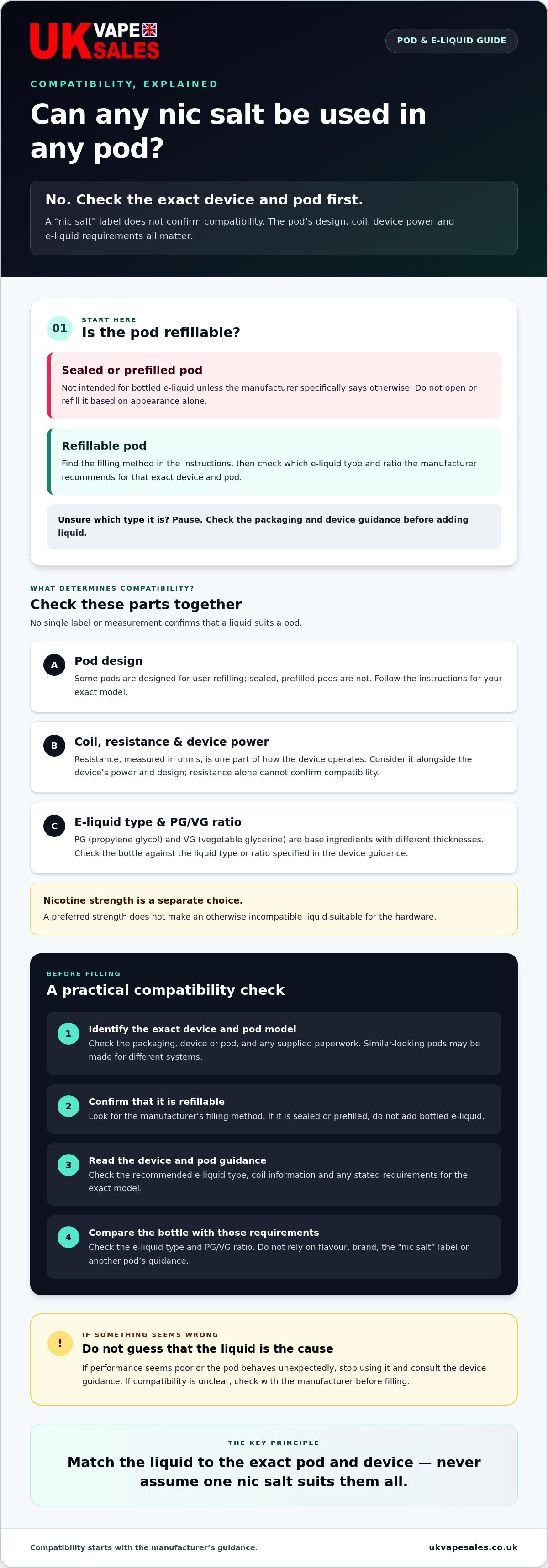
How can you check nic salt compatibility before filling a pod?
Use the exact device and pod details, not assumptions based on flavour, brand or the “nic salt” label. This quick check can help answer “can you use any nic salt in any pod?” for the hardware you own. Leave the pod empty until you’ve confirmed it’s refillable and checked the manufacturer’s recommendations.
A practical compatibility checklist
- Find the exact device and pod model. Check the packaging, device or pod itself, and any paperwork supplied with it. Similar-looking pods can be made for different systems, so match the model name carefully.
- Confirm that the pod is refillable. Look for a filling method in the instructions. If the pod is sealed or supplied prefilled, don’t open it or add bottled e-liquid. If you can’t identify the pod type, stop and check the device guidance first.
- Compare the instructions with the bottle. Look for requirements such as e-liquid type or PG/VG ratio, then compare them with the bottle label and ingredients. Check coil details too, if the manufacturer uses them to specify compatible liquids. Don’t infer suitability from nicotine strength alone.
Complete all three checks for the specific pod you plan to use. A liquid that matches one device’s instructions isn’t automatically suitable for another.
What if the instructions do not give a clear answer?
Don’t try the liquid just to see what happens. Contact the device manufacturer or the retailer that supplied the device or pod. Give them the exact model details and the information on the e-liquid label. A familiar flavour, matching brand name or nic salt wording on the bottle isn’t proof of compatibility.
The official NHS guidance provides broader information about e-cigarettes and e-liquids. For a specific compatibility decision, use your device instructions or ask the manufacturer. If you still can’t confirm that the liquid is suitable, leave the pod unfilled until you have a clear answer.
Once you’ve checked your device’s requirements, you can browse the nic salts collection and compare bottle details with that guidance. The collection is a place to explore options, not a guarantee that every liquid will suit every pod.
What should you do if a nic salt does not suit your pod?
Poor performance doesn’t prove the e-liquid is the cause. A pod or device can behave unexpectedly for different reasons, and symptoms alone aren’t enough to diagnose a fault or confirm incompatibility. If something seems wrong, stop using the device and check its instructions before changing liquids or parts.
When should you stop using the pod and check the instructions?
Stop if the device displays an error or behaves in a way its guidance doesn’t describe as normal. Consult the manufacturer’s troubleshooting advice for your exact model. Don’t keep vaping to test a theory or assume that changing the liquid will fix the issue.
Follow the checks in the device guidance before taking further action. Replace the pod only if the manufacturer’s instructions indicate that replacement is necessary. If the cause remains unclear, contact the manufacturer or the retailer that supplied the device rather than guessing from the symptoms.
Choosing a suitable next step
Before selecting another nic salt, confirm what your specific device and pod accept. Check the pod type and compare the maker’s e-liquid guidance with the details on the bottle. The question “can you use any nic salt in any pod?” has the same practical answer: don’t assume compatibility, and don’t use trial and error when the guidance is unclear.
If you’re considering a sealed format, the prefilled vape kits category may help you explore that type of system. Sealed pods are supplied prefilled and aren’t intended for adding bottled liquid. For refillable devices, check the instructions first. Elfliq nic salts are one available range, not a universal recommendation for every pod.
Start with your device model and its instructions, then browse liquids only after confirming they meet the stated requirements. That keeps the decision grounded in the hardware, rather than a label or a guess.
Check your pod before choosing a nic salt
So, can you use any nic salt in any pod? No. Compatibility depends on the specific device and pod, so check the manufacturer’s guidance before filling. First confirm that the pod is refillable, then compare its e-liquid requirements with the information on the bottle. Nicotine preference is separate from whether the liquid suits the hardware.
If a pod behaves unexpectedly, stop and consult its instructions instead of assuming the e-liquid is to blame. Poor performance alone doesn’t identify the cause, and replacement should follow the manufacturer’s advice.
UK Vape Sales offers a nic salts collection and selected nic salt products. Its specialist-led editorial approach focuses on balanced guidance, not claims that one liquid suits every device. Check your pod’s requirements first, then browse nic salts and check your device guidance before choosing.
A little checking can help you make an informed choice instead of relying on guesswork.
Frequently Asked Questions
What does the nicotine strength on a nic salt label mean?
It indicates the concentration of nicotine in the e-liquid, commonly shown in milligrams per millilitre (mg/ml). It describes the liquid, not the pod’s capacity or its compatibility with a device. Read the bottle carefully and keep nicotine concentration separate from the device checks covered in this guide.
What is the maximum nicotine strength permitted for e-liquid in the UK?
Under current UK rules, nicotine-containing e-liquid, including nic salts, must not exceed 20mg/ml, also shown as 2%. This is a legal maximum, not a recommendation about which strength to choose. If you need guidance on nicotine strength, consult an appropriate healthcare professional or trusted stop-smoking service.
What is the maximum bottle size for nicotine e-liquid in the UK?
Nicotine-containing e-liquid can be sold in bottles of up to 10ml under the current UK rules. This limit concerns the bottle the liquid is sold in. It doesn’t tell you whether the liquid is suitable for a particular device, so check the product label and relevant device information separately.
Is there a capacity limit for vape pods in the UK?
UK rules set a maximum capacity of 2ml for vape tanks, pods and cartridges. This is a product-capacity limit, not an instruction to fill every pod to its maximum. Follow the device maker’s filling guidance, and check the product information if you’re unsure about a pod’s stated capacity.